



Beyond the West: The challenges of psychological care for foreign people.
Psychological care for foreign people can be very challenging, especially if they come from places far removed from Western culture. For psychology professionals caring for this population, the knowledge and techniques learned at university and psychotherapeutic schools must be taken into account, as they are then the tools they have to listen, analyze, intervene and, finally, alleviate suffering.
It is generally considered that listening is something “natural” or that the best professional position is neutral. However, our listening is biased by our training. We listen according to our theory; it is not an empty or neutral listening. Moreover, our training will be permeated by the context of our time, with certain approaches being prominent over others and is dependent on a political factor, since in universities one theoretical current has more weight than another due to the forces of power within the university. But, above all, it will be determined by the culture where psychotherapy has been born and flourished, that is, Western culture. I will explain this idea with various examples that my professional experience has given me.
The challenges of psychological care for people of indigenous origin
I am originally from Guatemala, a country full of deep stratifications that separate us from each other. The Mayan peoples have been subjected to all kinds of domination through racism, the theft of their goods, the destruction of their knowledge and the extermination of their villages. During one of my university internships, I was able to attend a ceremony in a remote village in northwestern Guatemala, in the Department of Quiché, one of the areas most affected by the genocide perpetrated by the Guatemalan State under the command of one of the bloodiest dictators of the 1980s. In that town they were preparing to open a mass grave. Many of the Mayan descendants of that village gathered in a large room, telling stories of their missing relatives, especially the last time they saw them alive. They wove together physical ties representing the ties that bound them to their loved ones and to the community. They respected the silence of those who did not want to speak, they remembered together what happened that day when they applied the scorched earth strategy in their village. The community psychologist had the support of a community leader who did the translation. At that time there was a strong debate in Guatemala about how to carry out the work of NGOs in the field, if they were a real support to the communities or if they were the installation of another form of colonialism.
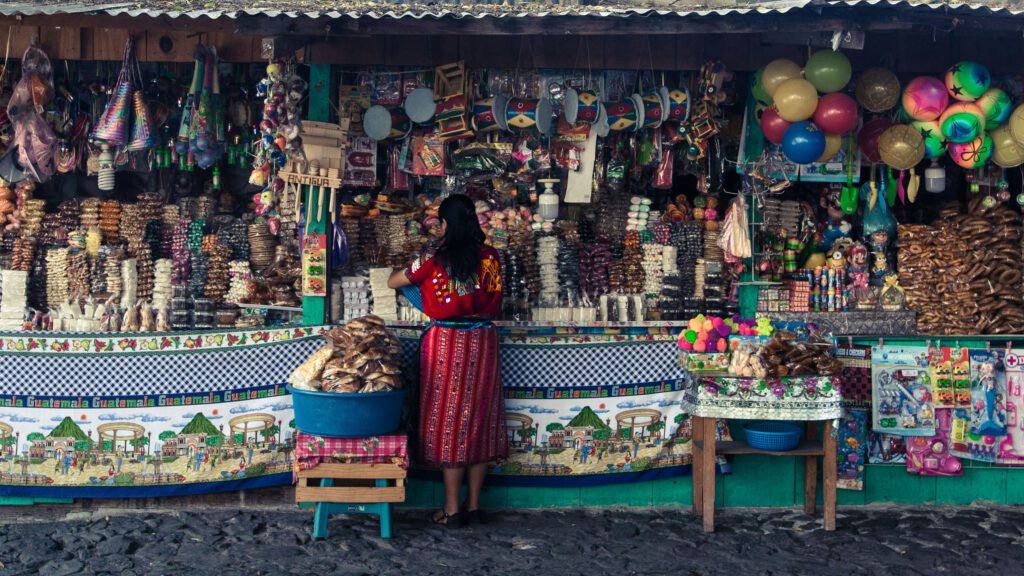
During those practices, I vividly remember one early morning, while I was accompanying a group of women to the town hall so they could register as naturalized citizens and thus exercise their citizenship rights. We were riding in the back of a pickup truck, an all-terrain vehicle, so we could reach the distant village where they lived. They began to laugh and point at me, and one of them finally asked me, with what I interpreted as embarrassment and mischief, in basic Spanish, “Are you a man or a woman?” With my jeans and cap, they couldn’t tell. They and I are Guatemalan women, but foreigners among us. How could I, in my training as a psychologist, acquire any knowledge to be able to cross the border? Nothing I had been taught at university made this journey possible.
The Challenges of Psychological Care for Foreigners in Public Institutions
On this side of the world, in Spain, I worked for many years in public services where caring for foreigners, outside the boundaries of Western culture, was also a constant challenge, not only for psychological care, but also for the institutions. I remember a meeting with children and their families at Social Services, where a social worker spoke of her concern about the, to her, strange attitude of a Salvadoran mother. During the meeting, she revealed that the mother had brought her baby wrapped in a tight blanket that prevented the baby from moving its legs and arms. Was this an indication of neglect or not? At that moment, I was able to intervene, since my nieces were born in El Salvador and were swaddled in the same way. This form of swaddling calmed them and helped them sleep better, because, according to the nurses, it made the babies feel as if they were inside their mother’s womb, and leaving their limbs free distressed them, as they were unable to recognize the movements as their own. They had turned an element of Indigenous tradition into a common practice in hospitals. Shouldn’t this mother who swaddles her baby to make him feel safe be viewed positively? This is how a protective action can become an indication of neglect due to a lack of cultural coordination.

Psychological care for foreigners posed a greater challenge in working with refugees and asylum seekers. In the working group of psychologists from all the organizations that served refugees, the same question always arose: How do we care for people from the African continent? How do we get them to attend appointments, for example, men from Syria? In general, how do we bring psychology closer to cultures where we don’t exist as a profession? After all, psychology was born at a certain moment in history and in a very specific place: the Western world (Europe and the United States). I remember a specific case of a boy from a small village in Afghanistan. He was suffering from severe pain; he had been referred to the hospital, and the doctors couldn’t find anything. They referred him to Mental Health; the psychiatrist didn’t see a specific clinical picture, such as Post-Traumatic Stress Disorder, and left his file open but without treatment. He was given the option of attending psychology sessions. In my sessions, he couldn’t help but feel a sharp pain, along with the pain of not having his family nearby, but above all, he couldn’t deal with the guilt of having gone against his father’s advice and inflicting suffering on his family. Medicine and psychiatry couldn’t treat him. Would it be possible to treat him through psychotherapy?

Some guidelines for psychological care for foreigners outside the borders of the West.
Some guidelines that have helped me listen more openly and try to cross borders to address the suffering of other culturally distinct people:
- Questioning the knowledge of Western knowledge, knowing that it has its reach, but also its limits, because like all knowledge, it is partial.
- Being open to studying and learning about other ways of facing life, to delving deeper into readings from other cultures and questioning our Eurocentric “ego.”
- Being curious about other knowledge, for example, everything developed by Latin American decolonial knowledge.
- Decentering our knowledge, that is, not believing that our knowledge is better or superior to other knowledge. Just because it has been predominant due to the conquest of history and territories does not mean it is the true one. Like all truth, it is only partial.
- All of this doesn’t mean that anything goes, but rather that we must include within our complex work a logic of the case that organizes the elements at play, without assuming anything. Ask a lot of questions, and don’t assume that our symbolic order will serve as a support, since we don’t use the same logic or expressions. Sometimes not knowing what the other person is going through is what guides us most in our work.