
Adolescence and Pornography: What You Need to Know (Even If It Feels Uncomfortable)
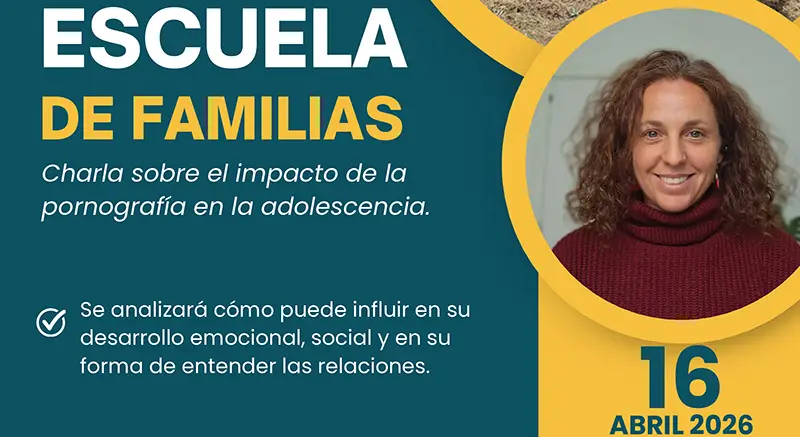
Last April, I was invited by a local secondary school to give a talk on the impact of pornography on adolescents. I was delighted to accept, and I wanted to share the key points here — because this is a topic that many families simply don’t know how to approach.
Talking about pornography with teenagers is still, for many families, deeply uncomfortable. Yet ignoring it doesn’t make it go away. On the contrary: it leaves the conversation in the hands of the internet.
Today more than ever, understanding this phenomenon is essential for educating, supporting, and protecting young people.
Earlier and easier access than ever
The reality is stark: most adolescents first encounter pornography much sooner than parents tend to assume.
- The average age of first exposure is around 11.5 years old
- 7 in 10 teenagers have watched pornography
- In many cases, that first contact is accidental
We’re not talking about a deliberate search. It’s something that appears almost by chance — an innocent Google search, a link, a moment of curiosity. And it often happens on the same device they carry everywhere: their phone.
It’s not just about willpower — it’s about brain development
This is one of the most important things to understand.
The adolescent brain is still a work in progress. The areas responsible for self-regulation, decision-making, and impulse control don’t fully mature until around age 24 or 25.
In the meantime:
- The emotional system — pleasure, curiosity, reward — is running at full speed
- The control system is still learning
Think of it like a car with a powerful engine and brakes that aren’t fully fitted yet.
This is not a matter of weak willpower. It’s a stage of human development.
When porn becomes “sex education”
In many households, sex is simply not discussed. And when there’s no conversation at home, something else fills that space.
Today, that “something” is the internet.
Many teenagers genuinely believe that pornography:
- Shows what real sexual relationships look like
- Explains what to expect from sex
The problem is: it doesn’t.

Porn vs reality: a crucial gap
Pornography typically depicts:
- Sex without emotional connection
- Unrealistic body standards
- Instant gratification
- No communication
Real sexuality involves:
- Respect
- Connection
- Communication
- Consent
When pornography is the only reference point, that distortion can become the norm.
Consequences that actually matter
The impact isn’t just moral or educational. It’s psychological, emotional, and relational.
Some of the most common effects:
1. Unrealistic expectations about sex Performance pressure, distorted views of relationships, and expectations that real partners simply can’t meet.
2. Risky sexual behaviour Pornography rarely depicts protection, boundaries, or responsibility.
3. Body image and self-esteem issues Comparisons with idealized, often surgically or digitally altered bodies lead to insecurity — in both boys and girls.
4. Objectification and gender inequality Pornography frequently reinforces dynamics where male pleasure is centred and female pleasure is secondary or performed.
5. Psychological impact Anxiety, social withdrawal, depression, and difficulties building real intimate relationships.
6. Desensitisation A gradual need for more extreme or novel content to achieve the same level of arousal.
When does it become a problem?
Not all exposure is automatically harmful, but there are clear warning signs:
- Compulsive use
- Difficulty stopping despite wanting to
- Secrecy or social withdrawal
- Irritability when access is restricted
- Interference with daily life, school, or relationships
At this point, we’re no longer talking about curiosity — we’re talking about a loss of control.
The answer isn’t to ban — it’s to stay present
Prevention isn’t only about parental controls or screen-time limits. It goes deeper than that:
✔ Availability Teenagers don’t need perfect parents — they need present ones.
✔ Ongoing conversation This isn’t “the talk.” It’s an ongoing dialogue.
✔ Comprehensive relationships and sex education That means talking openly about emotions, respect, consent, and what real intimacy looks like.
✔ Digital accompaniment Clear boundaries, gradual supervision, and guidance around responsible use.
How to start the conversation
You don’t need a prepared speech. Start simply:
- Ask what they already know
- Listen without judging
- Speak naturally, without making it into a big event
- Keep a calm, open tone
- And above all, make this clear: “You can talk to me about anything.”
One key idea to take away
Pornography consumption in adolescence is not simply a matter of personal choice — it’s a question of context, brain development, and the absence of other reliable sources of information.
The real challenge isn’t preventing teenagers from ever seeing pornography. It’s making sure it’s never their only source of learning about sex.
Written by: Gema Castaño